
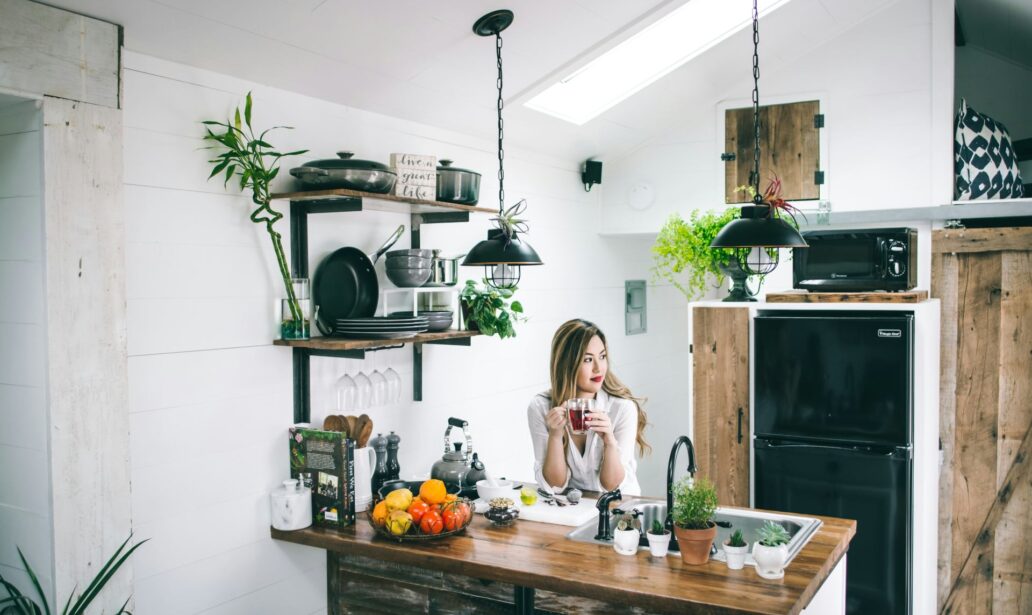
Think about how much time you spend in your kitchen. You make breakfast there. You brew your morning coffee. You cook dinner, pack lunches, and sometimes sit at the counter just to scroll through your phone. The kitchen is one of the most-used rooms in any home. Yet, for many people, it feels stressful, cluttered, or just plain uninviting.
That doesn’t have to be the case. You don’t need a full kitchen renovation to change how you feel about cooking. You don’t need to spend thousands of dollars on new cabinets or countertops. Instead, small, smart changes can completely shift the energy of your kitchen. The kind of changes that make you actually want to spend time there.
This guide walks you through real, practical steps to create a more enjoyable, functional, and beautiful kitchen, no contractor required.
Start With the Clutter; It’s Draining You More Than You Know
Clutter is the number one reason kitchens feel stressful. It’s not just a visual problem. It affects how you think, how you cook, and how long you spend cleaning up. Research consistently shows that disorganized spaces raise cortisol levels — the stress hormone. So before you paint a wall or buy new appliances, deal with the clutter first.
Start by clearing your countertops. Keep only what you use every single day. Your coffee maker, yes. That blender you used twice in 2022, no. Every item that sits on your counter takes up mental energy. When surfaces are clear, the kitchen instantly feels larger and calmer.
Next, open every cabinet and drawer. Pull things out. Donate duplicates. Toss expired pantry items. Reorganize what’s left so the things you reach for most are at eye level and easy to grab. This step takes an afternoon, but the payoff lasts for years.
A decluttered kitchen is the foundation of a kitchen you enjoy. Everything else builds on this.
Good Lighting Changes Everything
Lighting is one of the most underrated elements of kitchen design. Most kitchens rely on a single overhead light, usually one that’s too harsh, too dim, or in the wrong position. The result? A space that feels flat and uninviting.
Instead, think in layers. You want ambient lighting for the overall room, task lighting for your prep areas, and accent lighting for warmth. Under-cabinet LED strips are an affordable and easy upgrade. They light up your countertop workspace and add a soft glow that makes the whole room feel warmer.
If you have a dining area connected to your kitchen, consider a pendant light or a small chandelier above the table. It creates a natural divide between the cooking zone and the eating zone. It also adds personality.
Even swapping your current bulbs for warm-white LED bulbs (around 2700K) can make a noticeable difference. Warm light feels more relaxed and human. Cool blue light feels like a hospital. Small shift, big impact.
Organize for the Way You Actually Cook
Most kitchens are organized by category all the pots together, all the spices in one drawer. That makes sense in theory. But it’s not always how cooking actually works.
Try organizing by task instead. Create a “coffee station” with your beans, grinder, filters, and mugs all together. Set up a baking zone with your measuring cups, mixing bowls, and baking powder in the same cabinet. Put your most-used knives in a magnetic strip near the cutting board.
When your kitchen is organized around how you move and work, cooking feels effortless. You stop opening five cabinets just to make pasta. Everything is where you expect it to be. That ease adds up over time and makes your kitchen feel like it’s working with you, not against you.
Also, invest in a few basic organizers. Deep drawer dividers, lazy Susans for corner cabinets, and stackable container sets for your pantry. These aren’t glamorous purchases, but they make a real difference in your daily routine.
Think of your kitchen layout as a system. When the system works well, the experience improves automatically.
Add Personal Touches That Make It Yours
Functionality matters, but so does how your kitchen feels. A space that reflects your personality is one you actually want to be in. You don’t have to go overboard just a few personal touches can shift the whole mood.
Consider adding a small potted herb garden on the windowsill. Fresh basil, mint, or rosemary looks lovely, smells incredible, and is actually useful when you’re cooking. It adds life to the space literally and visually.
Hang a piece of art you love, or put up a simple chalkboard where you write daily menus or grocery lists. Display a beautiful ceramic bowl filled with seasonal fruit. Choose dish towels and a rug in colors that make you happy.
These small decorative choices are not superficial. They signal to your brain that this is a place that matters to you. That psychological shift changes how you interact with the space. You’ll find yourself tidying up more naturally because the kitchen feels worth taking care of.
Furthermore, scent plays a bigger role than most people realize. A clean kitchen smells fresh and welcoming. Keep a small candle or a diffuser with a subtle, food-friendly scent citrus, eucalyptus, or vanilla works well. The goal is for the kitchen to engage your senses positively the moment you walk in.
Make Cooking Itself More Enjoyable
Even a beautifully organized, well-lit kitchen won’t be enjoyable if the act of cooking feels like a chore. So focus on the experience itself.
Get a Bluetooth speaker and play music, a podcast, or an audiobook while you cook. Many people find that this single change transforms cooking from a task into something they look forward to. It’s no longer dead time — it becomes your time.
Invest in a few quality tools. A sharp chef’s knife, a heavy-bottomed pan, a good cutting board. You don’t need expensive, premium-brand cookware. But dull knives and thin pans make cooking frustrating. Quality tools make the process smoother and faster. They’re also safer.
Simplify your recipes, too. If cooking feels overwhelming, start with meals that require fewer than five ingredients. As you get more comfortable, you naturally start exploring more. But building confidence in the kitchen matters. It changes your relationship with cooking from obligation to enjoyment.
Additionally, meal planning takes a lot of the daily stress out of dinner. When you know what you’re making ahead of time, grocery shopping is faster, food waste goes down, and you stop standing in front of the fridge wondering what to cook at 6 PM.
Keep It Clean, Without the Daily Battle
A clean kitchen is an enjoyable kitchen. But cleaning shouldn’t feel like a war. The key is consistency over intensity. Small habits done daily are far better than a massive weekend deep-clean.
Wipe down counters after every cooking session. Wash dishes as you go rather than letting them pile up. Empty the sink before bed — waking up to a clean kitchen genuinely sets a better tone for the morning. Take five minutes at the end of each day to reset the kitchen to a tidy baseline.
Set a weekly rhythm for deeper tasks. Monday might be fridge clean-out day. Thursday might be when you wipe down the stovetop. Breaking cleaning into small chunks makes it manageable. It also keeps the kitchen at a level you’re proud of consistently.
Moreover, using the right cleaning products matters. A good all-purpose spray, a quality scrub brush, and microfiber cloths make cleaning faster and more effective. Don’t underestimate how good tools help here too.
Think About Flow and Movement
Kitchen ergonomics — how well your kitchen accommodates your natural movement — matters more than most homeowners realize. The classic design concept is the “kitchen work triangle”: the path between your sink, stove, and refrigerator. When these three points work together efficiently, cooking flows more naturally.
Look at how you move through your kitchen. Are there bottlenecks? Places where two people can’t pass each other comfortably? Areas where you’re always bumping into a cabinet door? Sometimes rearranging a rug, moving a trash can, or repositioning a kitchen cart is all it takes to improve the flow significantly.
If you have the option, keep a clear path between your prep area and your stove. Having to carry a heavy pot across the kitchen while dodging chairs or countertop appliances is frustrating and unsafe. Good flow reduces friction and makes cooking feel intuitive.
Your Kitchen Can Be Your Favorite Room in the House
Here’s the truth: the kitchen has the potential to be the heart of your home. It’s where food is made. Where families gather. Where the first cup of coffee happens every morning. It deserves to feel good.
You don’t have to overhaul everything at once. Pick one area — the countertops, the lighting, the organization system — and start there. Once that feels better, move to the next. Momentum builds quickly when you can see and feel the difference.
The goal isn’t a perfect, magazine-worthy kitchen. The goal is a kitchen that fits your life. One that makes cooking feel easier, cleaning feel manageable, and spending time there feel worthwhile.
Because when your kitchen works for you, everything else in your daily routine gets a little bit easier too.